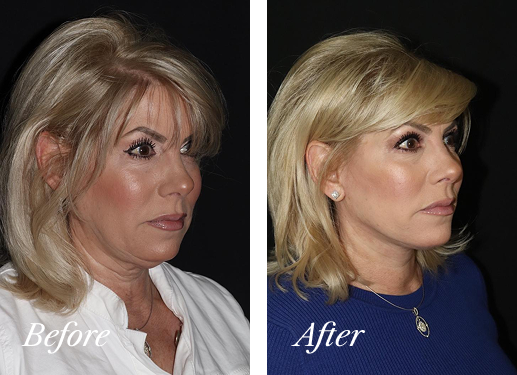
How Long Does It Really Take to Recover From a Neck Lift
What to Expect From Neck Lift Recovery Time
Neck lift recovery time is typically around two weeks before most people feel comfortable returning to work and daily life, but the full healing process unfolds in stages over several months.
Here is a quick overview of what to expect:
| Recovery Stage | Timeframe |
|---|---|
| Peak swelling and bruising | Days 3–5 |
| Drainage tubes removed | Days 1–3 |
| Compression garment worn | Up to 1 week |
| Socially presentable | Days 10–14 |
| Return to work and light activity | Around 2 weeks |
| Resume strenuous exercise | Weeks 3–6 |
| Final results visible | 3–6 months |
Tightness around the neck is one of the most common sensations patients report, and it can linger for anywhere from a few weeks to a few months after surgery. That surprises many people who expected to feel “normal” much sooner.
It is also worth knowing that swelling does not follow a straight line. It peaks around days three to five before it gradually fades. So if you feel like you looked better on day two than day four, that is completely normal.
The neck is a uniquely challenging area to treat. Unlike other parts of the face, it rarely responds to diet or exercise, which is exactly why neck lift surgery has become one of the most sought-after cosmetic procedures, with approximately 160,000 performed in the United States in 2020 alone.
I’m Mark Karolak, a facial plastic surgeon based in Martinsville, New Jersey, and understanding neck lift recovery time in detail is something I work through with every patient before they ever step into the operating room. My background in facial plastic surgery gives me a focused perspective on how to set realistic expectations and support patients through each stage of healing.
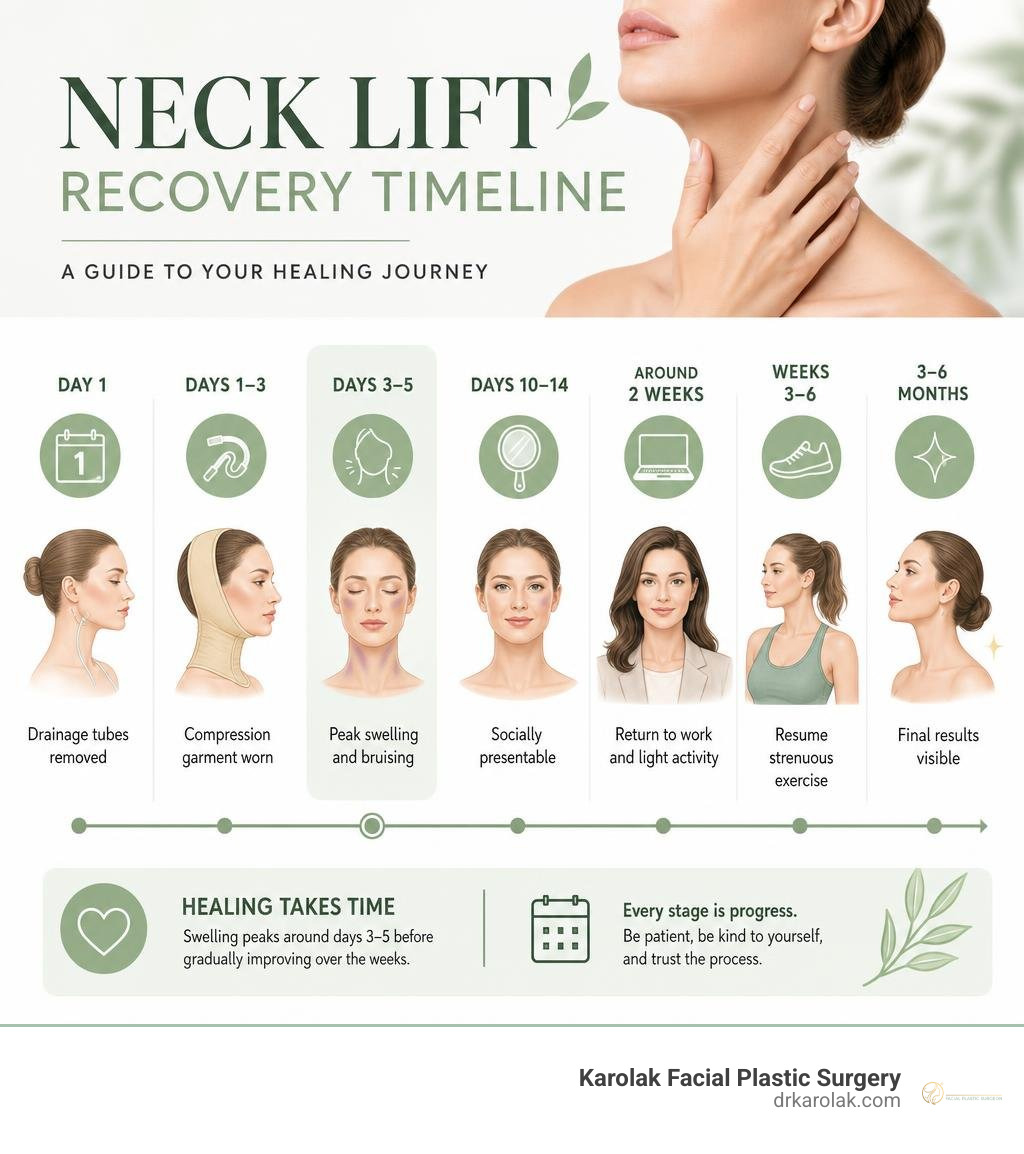
Understanding the Neck Lift Recovery Time: A Day-by-Day Timeline
When considering a lower rhytidectomy (the medical term for a neck lift), one of the most frequent questions we hear at our New Jersey practice is: “When will I look like myself again?”
While everyone heals at their own pace, having a structured roadmap helps remove the anxiety of the unknown. Knowing what to expect day by day allows you to plan your social calendar and professional life with confidence.
To help you visualize this journey, we have broken down the typical milestones patients experience from the moment they leave our surgical suite to the final reveal. For a deeper look into this process, you can read our detailed guide on What is the Recovery Time for a Neck Lift? and explore our resources on Neck Lift Recovery.

Days 1 to 3: Managing Initial Discomfort and Swelling
The first 72 hours require the most patience. Immediately after surgery, your neck will be wrapped in a supportive compression garment to minimize swelling and support the newly contoured tissues.
- Drainage Tubes: In some surgical settings, small, thin drainage tubes are placed under the skin to prevent fluid or blood accumulation. If used, these are typically kept in place for 1 to 3 days and are removed once the fluid stops draining.
- Compression Garment: You will need to wear your compression garment continuously during this initial stage, usually for up to one week, or as directed by your surgeon.
- Peak Swelling: It is crucial to know that swelling and bruising will peak between days 3 and 5. Do not be alarmed if you look more swollen on day three than you did on day one; this is a completely natural inflammatory response.
- Pain Management: Post-operative soreness is common but easily managed. We recommend using prescribed or approved over-the-counter pain relief. Avoid medications that can thin the blood, such as aspirin or certain anti-inflammatory drugs, as they can increase the risk of bleeding.
Days 4 to 7: Transitioning and Removing Sutures
By the end of the first week, the initial intensity of the recovery begins to subside. You will likely return to the office for your first post-operative follow-up.
- Suture Removal: If non-dissolvable sutures were used, they are typically removed around day 5 to 7.
- Bruising Resolution: While bruising and swelling will still be visible, they will begin to transition from deep purple to green and yellow tones, indicating that your body is successfully clearing the blood cells from the tissue.
- Light Activity: You can begin light walking around the house. Keeping your blood circulating with very gentle movement is excellent for healing, but you must still avoid bending over, lifting heavy objects, or turning your neck abruptly.
For more details on what to expect during this first week, you can read about Neck lift surgery: What to expect, recovery time and risks.
Days 8 to 14: Returning to Work and Social Presentability
This is the turning point where most patients begin to feel like themselves again.
By days 10 to 14, most people look socially presentable. This means that while you may still have some residual, subtle swelling or minor bruising that can easily be camouflaged with makeup or a high-collared shirt, you will feel comfortable going to the grocery store, running errands, and meeting friends without feeling self-conscious.
Most patients are ready to return to work and resume daily activities by the 2-week mark. If your job involves heavy physical labor, you will need to wait a bit longer, but desk jobs are entirely manageable at this stage. To learn more about returning to your routine, check out our insights on the Recovery Time for a Neck Lift.
Weeks 3 to 6: Resuming Normal Activities and Exercise
By week three, your incisions are well-healed, and the structural layers beneath the skin have begun to secure themselves in their new, elevated positions.
- Exercise: You can gradually reintroduce moderate exercise, such as brisk walking or light cycling. However, heavy lifting, strenuous cardio, and high-impact activities should be avoided until at least week 4 to 6 to prevent spikes in blood pressure that could cause late-stage swelling.
- Residual Swelling: While 80% to 90% of the swelling resolves in the first few weeks, the remaining fraction can take 3 to 6 months to completely dissipate. This final refinement phase is subtle, but you will notice your jawline becoming increasingly defined as the weeks pass. For more information on the final stages of healing, read about achieving a Neck Lift Full Recovery.
Key Factors That Influence Your Healing Process
No two recoveries are identical. Your personal timeline will depend on several variables, ranging from your body’s natural healing capacity to the specific surgical techniques used.
One fascinating anatomical factor is the de Castro classification, which describes how the platysma muscle (the thin sheet of muscle in the neck) is structured.

- Type I (70–75% of people): The muscle sheets cross over and interlace for about 1 to 2 centimeters below the chin.
- Type II (15–20% of people): The muscle fibers do not interlace but join at the midline of the chin.
- Type III (10% of people): The muscle sides remain completely separate with no midline crossing, which often leads to an earlier and more pronounced appearance of “turkey neck” or vertical bands.
Depending on your specific anatomy, your surgeon will customize the muscle repair, which directly impacts your recovery.
The Impact of Anesthesia on Your Neck Lift Recovery Time
The type of anesthesia used during your procedure plays a massive role in how you feel in the immediate hours and days following surgery.
Many traditional practices perform neck lifts under general anesthesia or deep IV sedation. While effective at keeping you asleep, general anesthesia often leaves patients dealing with a “hangover” effect characterized by severe nausea, vomiting, grogginess, and sore throats from breathing tubes. Nausea and vomiting are particularly risky after a neck lift, as the physical straining can cause blood pressure spikes, potentially leading to bleeding under the skin (hematoma).
At Karolak Facial Plastic Surgery, our unique specialty is performing advanced facial rejuvenation procedures, including neck lifts, without general anesthesia. By utilizing local anesthesia combined with light oral sedation, our patients remain comfortable, relaxed, and awake throughout the procedure.
The benefits of avoiding general anesthesia include:
- Virtually no post-operative nausea or vomiting.
- A much faster initial recovery speed, most patients can walk out of the clinic feeling clear-headed.
- Lower overall surgical risks, such as a reduced risk of deep vein thrombosis (blood clots).
Procedure Type: Isolated Neck Lift vs. Combined Facelift
The scope of your surgery will also dictate your neck lift recovery time.
- Isolated Neck Lift: If you are only addressing the neck via a platysmaplasty (tightening the neck muscles) and cervicoplasty (removing excess skin), your recovery will be highly localized. Swelling is concentrated below the jawline, and the overall healing demand on your body is lower.
- Combined Facelift and Neck Lift: It is very common to combine these procedures because the aging process usually affects both the lower face and the neck simultaneously. If you choose to combine them, your recovery will involve a slightly larger surgical area, meaning swelling and bruising will extend up into the cheeks and temples. However, the overall downtime does not double; you will still generally be socially presentable within 10 to 14 days.
To help decide which path is right for you, read Should I Combine a Neck Lift with My Facelift? and explore the comprehensive structural details in Neck Lift Surgery: Types, Recovery, Results | Faceliftology.
Managing Side Effects and Essential Aftercare
As your body heals, you will experience several normal, temporary side effects. Understanding these ahead of time prevents unnecessary worry.
- Neck Tightness: This is the most common sensation patients report. Because the platysma muscle has been tightened and excess skin removed, your neck will feel very tight, especially when swallowing or looking up. This is a sign of a successful structural repair and will gradually soften over a few weeks to a few months.
- Bruising and Swelling: These are inevitable. They will shift downward due to gravity, so do not be surprised if bruising moves toward your collarbone or chest before it fades completely.
- Numbness and Sensory Changes: The sensory nerves in the skin are temporarily disrupted during surgery. You will likely experience numbness along your jawline and neck. As these nerves regenerate, you may feel temporary “tingling” or “zapping” sensations. Normal feeling typically returns within a few months.

Tips to Optimize Your Neck Lift Recovery Time
To ensure your healing progress stays on track and to minimize discomfort, follow these essential aftercare steps:
- Keep Your Head Elevated: For the first two weeks, sleep with your head elevated on 2 to 3 pillows or sleep in a recliner. This uses gravity to reduce swelling and prevents accidental rolling onto your side.
- Apply Cold Compresses: Use cold compresses or ice wrapped in a clean cloth on your neck and jawline during the first 48 hours. Apply them for 15 minutes at a time to soothe the area and control swelling. Never apply ice directly to numb skin to avoid frostbite.
- Prioritize Smoking Cessation: You must stop smoking well in advance of your surgery and throughout your recovery. Nicotine constricts blood vessels, drastically reducing the oxygen supply to healing tissues, which can lead to skin loss, poor healing, and severe scarring.
- Eat a Gentle, Healthy Diet: Stick to soft, easy-to-chew foods for the first few days to minimize jaw movement. Maintain a low-sodium diet to prevent excess fluid retention, and stay hydrated.
Potential Risks and Complications to Watch For
While a neck lift is highly safe when performed by an experienced specialist, all surgical procedures carry some degree of risk. Being aware of potential complications allows you to identify them early.
- Hematoma: This is a collection of blood under the skin, which usually presents as sudden, severe swelling and bruising on one side of the neck, often accompanied by pain. It requires immediate medical attention to drain the fluid.
- Infection: Though rare due to the excellent blood supply in the face and neck, signs of infection include increased redness, warmth, throbbing pain, or pus draining from the incisions.
- Asymmetry: Minor temporary asymmetry is common due to uneven swelling on the left and right sides of your body. True permanent asymmetry is rare and can be evaluated once all healing is complete.
- Scarring: Incisions are strategically hidden under the chin and behind the ears. While they may appear red or slightly raised initially, surgical scars typically take 12 to 18 months to fully mature, fade, and flatten.
If you experience shortness of breath, chest pain, severe unilateral swelling, or a sudden spike in temperature, contact your surgical team immediately.
Frequently Asked Questions
How long does the feeling of tightness last after a neck lift?
A feeling of tightness around the neck is a completely normal sensation that typically peaks in the first few weeks as the tissues heal and contract. For most patients, this tightness gradually softens and resolves within a few weeks to a few months as the platysma muscle adapts and the sensory nerves recover.
When can I sleep flat on my back again?
You should plan to sleep with your head elevated on multiple pillows or in a recliner for at least the first 10 to 14 days. This keeps your neck aligned, prevents accidental twisting, and helps drain excess fluid to reduce swelling. Once your surgeon confirms your incisions have healed and the bulk of the swelling has subsided, you can slowly transition back to sleeping flat on your back.
How long do neck lift scars take to fade?
Because incisions are placed in natural skin creases under the chin and around the ears, they are highly discreet. While they will go through a pink or slightly raised phase in the first few months, they will gradually fade and become pale, flat lines. The complete scar maturation process takes about 12 to 18 months. Protecting your incisions from direct sun exposure with sunscreen and hats is essential during this time to prevent permanent darkening.
Conclusion
Recovering from a neck lift is a journey of patience, but the reward is a beautifully contoured, youthful neck and jawline that can last 10 to 15 years. While the initial neck lift recovery time requires about two weeks of social downtime, the long-term results are well worth the wait.
At Karolak Facial Plastic Surgery, we are dedicated to helping our patients across New Jersey, from Wall Township and Colts Neck to the Jersey Shore, achieve incredibly natural-looking results. By performing our procedures under local anesthesia, we eliminate the heavy side effects of general anesthesia, allowing for a safer, more comfortable, and faster return to your daily life.
If you are ready to restore definition to your jawline and say goodbye to loose skin, we invite you to learn more about our approach to Neck Lift Surgery and schedule a consultation with us today.