Say Goodbye to Smile Lines with the Best Facelift for Nasolabial Folds
Why a Facelift for Nasolabial Folds Isn’t Always the Answer (But Sometimes Is)
A facelift for nasolabial folds is one of the most misunderstood topics in facial rejuvenation, and choosing the wrong treatment can leave patients looking less natural rather than more refreshed.
Here is the quick answer many patients are looking for:
Can a facelift fix nasolabial folds?
- Usually, not completely: a traditional facelift targets the lower face, jawline, and neck. It does not fully correct folds caused by structural anatomy or volume loss.
- Sometimes, yes: if significant skin laxity, sagging jowls, or a loose neck are present, a facelift, especially a deep plane facelift, can indirectly soften folds by lifting descended midface tissues.
- For isolated smile lines, a surgical facelift may not be the appropriate first step. A consultation can determine whether volume loss, skin quality, or tissue descent is the main concern.
- The goal is never to erase smile lines completely: that would look unnatural. The aim is to soften them.
So why do so many people walk into consultations convinced a facelift will “stretch” away their smile lines? It comes down to a very understandable desire: a lasting solution that preserves natural facial contours.
The reality is more nuanced. Nasolabial folds deepen due to a combination of structural changes: descending fat pads, bone resorption, weakening ligaments, and loss of skin elasticity. A surgical “stretch” alone cannot address all of those causes, and in patients without true skin laxity, it can actually produce an unnatural result.
This guide breaks down exactly when surgery helps, when it does not, and what to consider, with special attention to the deep plane facelift techniques used by Dr. Karolak.
Dr. Mark Karolak is a facial plastic surgeon based in Martinsville, New Jersey, with extensive experience evaluating and treating patients seeking a facelift for nasolabial folds and broader midface rejuvenation. His surgical practice focuses on deep plane facelifts and natural-looking facial rejuvenation designed to preserve each patient’s individual features.
What Causes Smile Lines and Can a Facelift for Nasolabial Folds Work?
To understand how a facelift for nasolabial folds works, it is helpful to first look at why these lines appear.
Many patients believe that smile lines are simply wrinkles caused by repeated facial expressions. In reality, the nasolabial fold is a normal anatomical boundary that separates the cheek from the upper lip. Everyone has them, even infants. They only become a cosmetic concern when they deepen, shadow, or begin to sag.
With aging, several structural shifts happen simultaneously in the midface:
- Malar Fat Pad Descent: The prominent fat pad in the cheeks, called the malar fat pad, gradually slides downward and forward due to gravity and weakening supportive tissues. This descending tissue pools right above the nasolabial boundary, creating a heavy overhang.
- Pyriform Aperture and Maxillary Recession: The underlying skeletal structure changes. The maxillary bone (your upper jawbone) actually recedes over time. By age 60, the maxilla loses approximately 10% of its anterior projection. This loss of bone support around the pyriform aperture (the pear-shaped bone opening around the nose) causes the overlying tissue to collapse inward, deepening the shadow.
- Loss of Skin Elasticity: Natural aging and environmental factors cause a steady decline in dermal collagen and elastin, making the skin less resilient and more prone to creasing.
Because of these deep structural causes, a traditional “skin-only” facelift or a simple lateral pull cannot fully resolve the problem. If you try to pull the skin tight enough to erase these folds, you risk creating a highly unnatural, “windswept” look. For a deeper look at non-surgical options, check out this guide on How to Reduce Nasolabial Folds.
However, when performed correctly, there are undeniable structural benefits to surgery. Learn more about what a surgical procedure can achieve in this detailed article on What are the benefits of a facelift?.
The Anatomy of Midface Aging: Why Folds Deepen
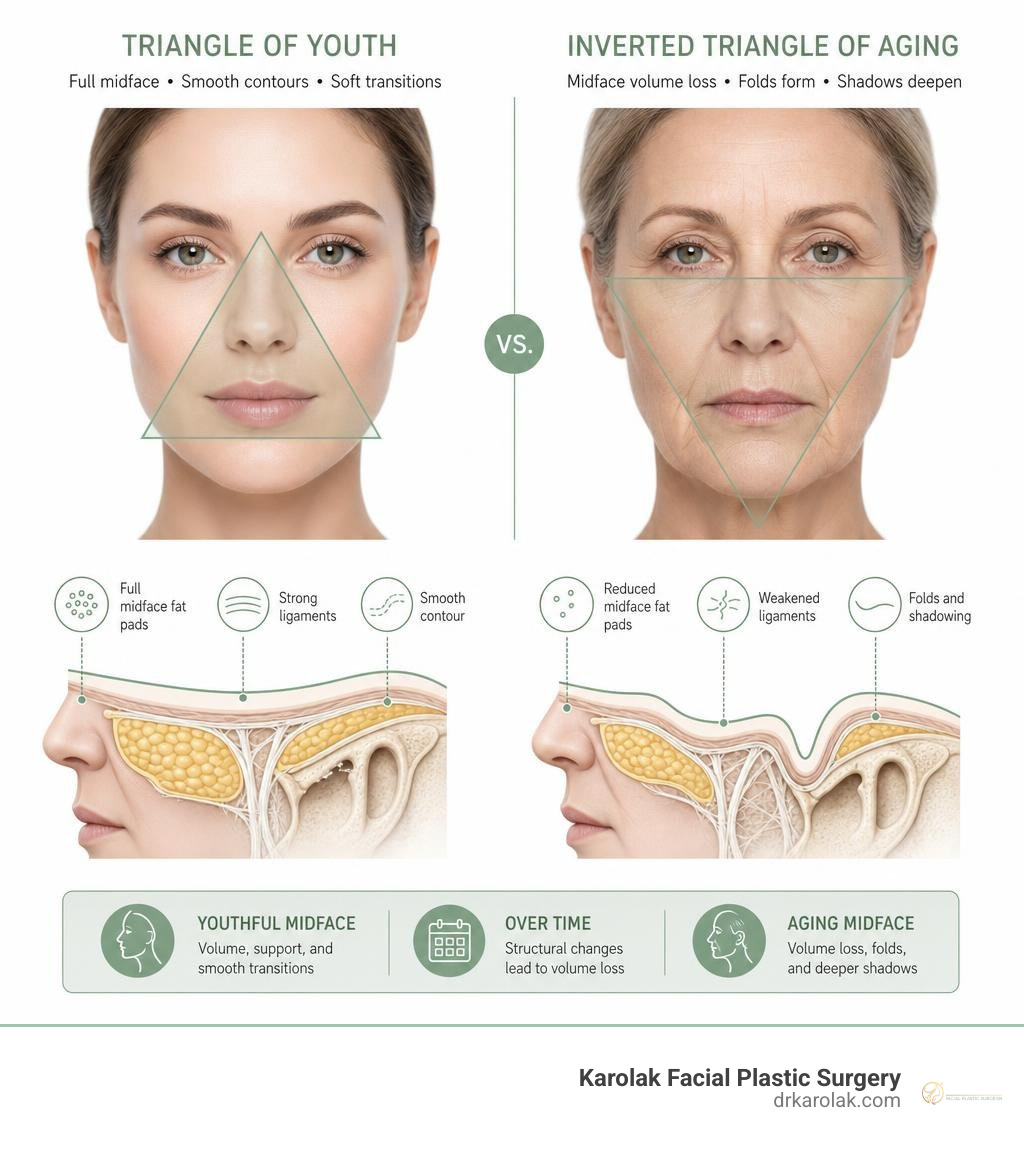
The transformation of the midface is often referred to as the inversion of the “Triangle of Youth.” In a youthful face, the base of the triangle lies across the cheeks, and the apex points down to a sharp chin. With aging, deep fat pad atrophy, collagen degradation, and ligament weakening cause the base of the triangle to drop, creating a wider lower face and deep facial folds.
To understand how severe your folds are, plastic surgeons and dermatologists often use the Wrinkle Severity Rating Scale (WSRS) or other photonumeric scales:
- Grade 1 (Mild): Barely perceptible fold; slight shadow.
- Grade 2 (Moderate): Shallow but visible fold; noticeable under direct light.
- Grade 3 (Severe): Deep fold; the boundary is visible in all lighting conditions, but there is no skin overhang.
- Grade 4 (Very Severe): Extremely deep, long fold with a distinct shadow.
- Grade 5 (Extreme): Redundant, hanging skin fold that physically overlaps the nasolabial groove.
Photoaging (primarily from UV exposure) accounts for up to 80% of visible facial aging, accelerating collagen degradation and making these folds appear much sooner and deeper than they would through natural chronological aging alone.
When is a Facelift for Nasolabial Folds the Right Choice?
A facelift for nasolabial folds is the right choice when the primary driver of the fold is skin laxity and tissue descent rather than isolated volume loss.
If you look in the mirror and gently pull your cheek skin upward and diagonally toward your temples, does the fold soften beautifully? If so, you have skin laxity that a surgical lift can address. However, if your jawline is sharp, your neck is tight, and you have no jowls, a facelift is generally not recommended.
Surgery is highly effective when your smile lines are accompanied by:
- Significant lower face laxity
- Sagging jowls along the jawline
- Loose, hanging skin in the neck area
To understand how to address these lower face concerns, read What’s Best Treatment for Sagging Jowls?. If you are still deciding between surgical and non-surgical approaches, this comparison of a Facelift vs Non-Surgical Facelift provides valuable clarity.
Surgical Alternatives: Deep Plane Facelift vs. Midface Lifts
If you decide to pursue a surgical route, the specific technique your surgeon uses makes all the difference in whether your nasolabial folds improve. For patients with lower-face laxity, jowls, and midface descent, Dr. Karolak often focuses on deep plane facelift principles because they address deeper facial support structures rather than simply tightening skin.
The Role of a Deep Plane Facelift for Nasolabial Folds
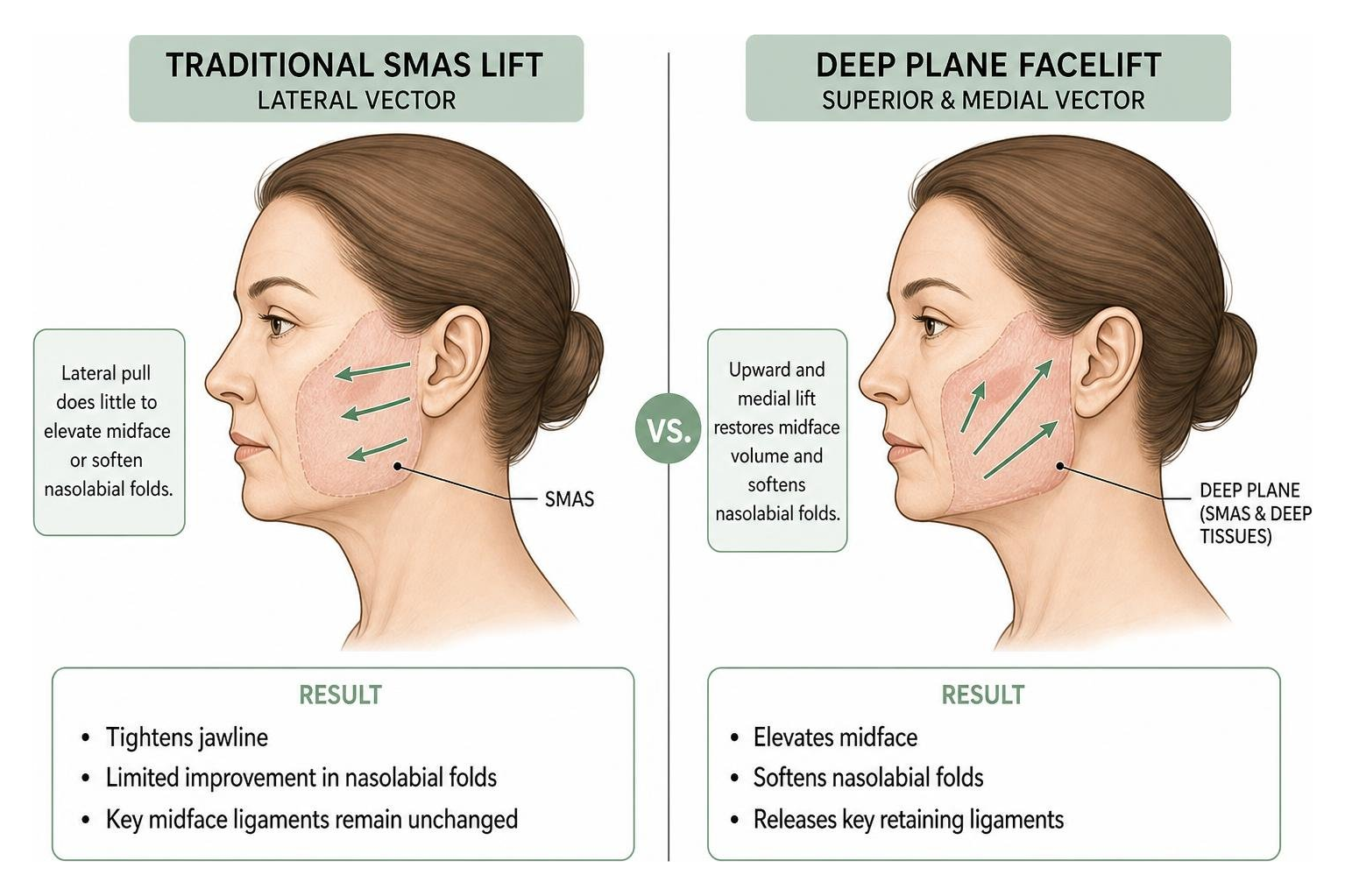
A traditional SMAS (Superficial Muscular Aponeurotic System) facelift pulls the tissue laterally, or sideways. While this is excellent for sharpening the jawline, it does very little for the nasolabial folds because the vector of the pull is too horizontal, and the key retaining ligaments of the midface remain locked in place.
This is where the deep plane facelift shines. Karolak Facial Plastic Surgery serves patients across New Jersey, from Wall Township and Monmouth County to the Jersey Shore, using advanced deep plane techniques.
A deep plane facelift works by:
- Entering the space beneath the SMAS layer.
- Releasing the tight facial retaining ligaments, specifically the zygomatic and masseteric ligaments, that bind the midface tissues down.
- Elevating the descended malar fat pad and repositioning it vertically.
- Securing the tissue in its original, youthful position.
Because the tissues are released and lifted vertically rather than pulled tightly to the side, the deep plane approach yields incredibly natural-looking results. It softens the nasolabial folds from above without creating a flat or “pulled” look. Learn more about Dr. Karolak’s deep plane approach through the primary Facelift procedures page, or compare options in Mini Facelift vs Facelift: Which is Better?.
Furthermore, because the lift is performed on the deep structural layers rather than putting tension on the skin, the results are highly durable. For details on what to expect long-term, explore How long does facelift last?.
Fat Transfer and Cheek Lifts for Volume Restoration
For many patients in the Tri-State area, the best surgical outcome is achieved by combining a deep plane facelift with autologous fat grafting, also called fat transfer.
During this procedure, the surgeon harvests a small amount of fat from another area of the body, such as the abdomen or thighs, purifies it, and meticulously injects it into the deep fat compartments of the midface. This restores the lost bony and soft-tissue volume around the pyriform aperture and cheeks, providing the necessary structural support to lift the fold from its foundation.
When Non-Surgical Care Is Not Enough
Patients without substantial skin laxity or jowling may benefit from a conservative evaluation focused on skin health and realistic expectations. However, non-surgical care cannot reposition descended midface tissue, release facial retaining ligaments, or correct significant jowling and neck laxity.
For patients whose nasolabial folds are primarily caused by lower-face descent, a deep plane facelift may offer a more comprehensive approach. By addressing deeper support structures and repositioning descended tissue, the procedure can improve facial balance while avoiding an overly tight appearance.
A facial plastic surgery consultation should assess the full face rather than treating the fold in isolation. Dr. Karolak evaluates midface descent, skin elasticity, jawline definition, neck laxity, and each patient’s goals to determine whether surgery is appropriate.
Frequently Asked Questions About Nasolabial Fold Treatments
Will a facelift completely erase my smile lines?
No, and it should not. Completely erasing nasolabial folds can look unnatural because these folds are a fundamental part of facial anatomy. When a patient smiles or laughs, the face needs natural movement and animation lines. The goal of a facelift for nasolabial folds is to soften deep shadows and lift sagging skin to restore a more rested contour, not to make the face completely flat.
If fine, etched skin lines are also a concern, surgery may be combined with skin-quality treatments when appropriate. Learn more in the guide to Laser Skin Resurfacing.
How much does a facelift cost?
Facelift pricing varies based on the technique, the extent of correction needed, whether additional facial procedures are performed, facility costs, and the surgeon’s experience. The most useful way to understand cost is through a personalized consultation, where the surgical plan can be tailored to the patient’s anatomy and goals.
For more details on planning for surgery, see How much does facelift cost?.
Can facial exercises or skincare reduce deep folds?
Skincare and facial exercises can support skin health, but they cannot correct deep, structural nasolabial folds.
- Skincare: Prescription retinoids, daily broad-spectrum SPF 30+, and vitamin C can support collagen and help limit UV-related skin aging. However, skincare cannot lift descended fat pads or restore lost bone support.
- Facial exercises: Some small studies suggest facial exercises may create a modest, temporary change in facial fullness. There is no strong clinical evidence that they lift sagging skin or permanently reduce deep structural folds.
Conclusion

There is no single “best” treatment for smile lines. The right path depends entirely on your unique anatomy, the severity of your folds, and whether your primary issue is volume loss or skin laxity.
Karolak Facial Plastic Surgery specializes in natural-looking, customized rejuvenation plans. Dr. Karolak specializes in advanced deep plane facelift surgery and midface restoration, performed completely under local anesthesia with oral sedation and without the risks, side effects, and heavy downtime associated with general anesthesia.
Patients visiting from Toms River, Rumson, Shrewsbury, Spring Lake, Fair Haven, Colts Neck, or elsewhere in the Tri-State area can explore treatment options in a consultation with the practice.
To learn more about what to expect after a surgical procedure, check out 5 Tips to Your Best Facelift Recovery and read the breakdown of How long is recovery from facelift procedure?.
Ready to discover the best approach for your face? Schedule a Consultation today.